
History
History Curriculum Rationale
Our History curriculum is designed to inspire pupils’ curiosity about the past and develop their understanding of how people, events and developments have shaped the world in which they live today. We aim to develop knowledgeable, inquisitive and thoughtful historians who can investigate the past, consider different perspectives and use historical evidence to reach informed conclusions.
Our Intent
Through a carefully sequenced and ambitious curriculum, pupils will develop:
- Chronological knowledge, developing an increasingly secure understanding of when significant people, periods and events occurred and how they relate to one another.
- Historical knowledge, building a rich understanding of significant individuals, societies, civilisations and events from British and wider world history.
- Historical concepts, including change and continuity, similarity and difference, cause and consequence, significance and historical interpretation.
- Historical enquiry, learning how historians ask questions, investigate evidence and construct accounts of the past.
- Understanding of sources, recognising that our knowledge of the past is constructed from a range of evidence and that sources need to be considered carefully.
- Historical vocabulary, enabling pupils to discuss and explain the past with increasing precision and confidence.
Curriculum Design
Our curriculum is carefully sequenced so that pupils develop their historical knowledge and understanding progressively over time.
Units are deliberately ordered to help pupils develop a secure understanding of chronology, enabling them to place new learning within an increasingly detailed mental timeline of the past. Important knowledge and concepts are revisited so that pupils can make connections between periods and build upon what they have previously learned.
The curriculum provides pupils with opportunities to study local, British and wider world history, helping them understand both the history of their own community and its connections with national and global events.
Pupils encounter a broad range of societies, individuals and experiences, enabling them to understand that history is complex and can be viewed from different perspectives.
Developing Historical Thinking
We want pupils not simply to remember historical facts, but to think like historians.
Pupils are encouraged to ask questions such as:
- What happened?
- When did it happen?
- What changed and what stayed the same?
- Why did this happen?
- What were the consequences?
- What similarities and differences can we identify?
- Why was this person or event significant?
- What evidence do we have?
- How reliable or useful is this evidence?
- Why might people interpret the past differently?
By exploring these questions, pupils learn that history involves investigating, interpreting and evaluating evidence, rather than simply learning a fixed collection of facts.
Chronology
Developing a strong sense of chronology is central to our History curriculum. Pupils regularly revisit timelines and make connections between the periods they have studied.
As pupils progress through the school, they develop an increasingly sophisticated understanding of:
- dates and historical periods;
- duration and sequence;
- ancient and modern;
- BC/BCE and AD/CE where appropriate;
- events happening simultaneously in different parts of the world;
- connections between different historical periods.
This helps pupils develop a coherent mental timeline into which new historical knowledge can be placed.
Historical Enquiry and Sources
Pupils learn that our knowledge of the past comes from historical evidence.
They encounter a range of sources, which may include artefacts, photographs, paintings, maps, buildings, written accounts, documents and archaeological evidence.
Pupils progressively learn to consider what a source can tell them, who created it, why it was created and what its limitations might be.
As their historical understanding develops, pupils recognise that historians may interpret the same evidence differently and that accounts of the past can change when new evidence or perspectives are considered.
Vocabulary and Knowledge
Explicit teaching of subject-specific vocabulary is an important element of our curriculum. Pupils are taught to understand and use both period-specific terminology and broader historical vocabulary.
Key knowledge is identified within each unit and deliberately sequenced so that new learning builds upon secure foundations. Opportunities for retrieval and revisiting help pupils remember important knowledge and make meaningful connections between different periods.
Local History
Local history provides pupils with an opportunity to see that significant historical events happened in the places around them, making history tangible and meaningful.
Where appropriate, pupils explore local buildings, people, artefacts, sites and events, considering how their community has changed over time and how local history connects with the national story.
For a school in the Worcester area, the exceptionally rich local heritage provides opportunities to connect pupils’ learning with events and periods such as the English Civil Wars, the Battle of Worcester and the experiences of Charles II, as well as broader changes in the development of the city and surrounding area.
Visits, historical trails, museums, local sources and fieldwork can help pupils understand that evidence of the past exists within their own community.
Wider Curriculum
History provides meaningful opportunities to make connections with geography, English, art, religious education and other curriculum areas, while maintaining its distinctive disciplinary identity.
Historical texts can enrich pupils’ reading and vocabulary, while maps and geographical knowledge help pupils understand where events occurred and how geographical factors influenced historical developments.
These connections deepen pupils’ understanding without reducing History simply to a context for learning in other subjects.
Inclusion
We believe all pupils should be able to succeed in History.
Historical learning is carefully structured so that pupils with different starting points and needs can access ambitious content. Timelines, maps, images, artefacts, vocabulary support, storytelling and carefully selected sources help pupils develop understanding while maintaining high expectations.
Teachers identify the essential knowledge that all pupils need to understand, providing appropriate scaffolding so that every child can participate meaningfully in historical enquiry.
Impact
By the end of their time at our school, we want pupils to have developed a secure and connected body of historical knowledge, a strong sense of chronology and the ability to think and communicate as young historians.
Pupils should be able to:
- place significant periods and events chronologically;
- recall and connect important historical knowledge;
- explain causes, consequences, changes and similarities;
- understand the significance of key people and events;
- use historical vocabulary accurately;
- ask historically valid questions;
- examine and interpret sources;
- recognise that the past can be interpreted in different ways; and
- use evidence to support historical conclusions.
Most importantly, we want pupils to leave us with a lasting curiosity about the past and an understanding that studying history helps them make sense of their community, their country and the wider world.
In summary
Our History curriculum enables pupils to understand chronology, build a rich knowledge of the past, investigate historical evidence and make connections between people, places and events. Through this, pupils develop the knowledge, curiosity and critical thinking needed to understand how the past has shaped the world in which they live.
Topics we are studying this year
Key Stage 2
Year 3

Year 4
Year 5
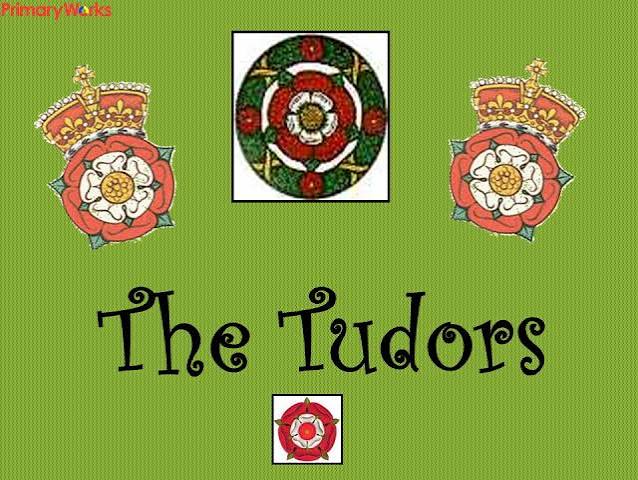
Year 6
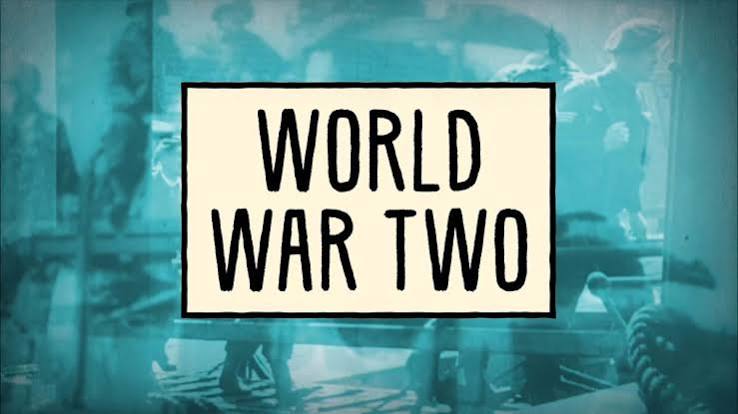

Key Stage 3
Year 7


Year 8


Year 9


Year 10


Year 11
